
Claude Certified Developer – Foundations (CCDV-F)
(Master Claude API, Agents, MCP, Prompt & Context Engineering, Claude Code, Security, Evaluation and Production Integration-with Certification Preparation.)
The trainer is also experienced in explaining complex technical concepts such as REST architecture, asynchronous processing, authentication, API integration, testing, deployment, and application development in a clear and practical manner. Students learn how these concepts work together when developing reliable, scalable, and production-ready AI applications.
An experienced Claude Certified Developer and AI Development Trainer with a strong software-development background and hands-on experience building and deploying production-ready applications. With hands-on experience developing LLM-powered applications using the Claude API, the trainer brings practical knowledge of modern AI development workflows, including Claude Code and MCP (Model Context Protocol). practical expertise in REST APIs, backend development, authentication, testing, deployment, and production API integration, helping learners understand how modern software systems are designed and delivered in real-world environments.
About the Instructor:
|
The trainer has hands-on experience working with LLM applications, Claude API, Claude Code, and MCP, with a strong focus on applying AI to practical software-development scenarios. The Learners gain practical knowledge through real-world examples, implementation-focused guidance, and industry-relevant development practices , Strong software-development background with production API experience.. The trainer also emphasizes AI security, responsible AI development, application evaluation, reliability, and optimization, helping students build a strong foundation for developing secure and production-ready AI applications using modern Claude technologies. Our Claude Certified Developer & AI Development Trainer brings a strong software-development background with hands-on experience in building and deploying production-ready applications and APIs. With 4+ years of relevant hands-on experience, the trainer combines technical expertise with practical teaching skills to explain complex concepts in a simple and structured manner. Able to explain REST, async processing, authentication, testing and deployment. Teaching experience further enables the trainer to simplify advanced concepts, demonstrate real-world use cases, and guide learners from fundamentals to practical AI development. |
Free Demo On:
Indian Timings: 25th October @ 9 PM – 10 PM (IST)/
U.S Timings: 25th October @ 11:30 AM – 12:30 PM (EST)/
U.K Timings: 25th October @ 4:30 PM – 5:30 PM (BST)
Class Schedule:
For Participants in India: Monday to Friday @ 9 PM – 10 PM (IST)
For Participants in the US: Monday to Friday @ 11:30 AM – 12:30 PM (EST)
For Participants in the UK: Monday to Friday @ 4:30 PM – 5:30 PM (BST)
What will I learn by the end of this course?
•Select a suitable Claude model based on quality, latency, cost and workload requirements.
• Implement streaming, batching, files/content handling and robust error handling.
• Design prompts and context deliberately rather than relying on trial-and-error prompting.
• Build tool-using applications and understand when to use MCP.
• Distinguish deterministic workflows from agentic systems and implement appropriate orchestration.
• Use Claude Code productively within a controlled software-development workflow.
• Design basic evaluation and regression-testing approaches for LLM applications.
• Identify prompt injection, secret exposure, unsafe tool use and untrusted-input risks.
• Reason through CCDV-F-style multiple-choice and multiple-response scenarios.
- 30+ Hours of Live Training along with recorded videos
- 1 Year access to the recorded videos
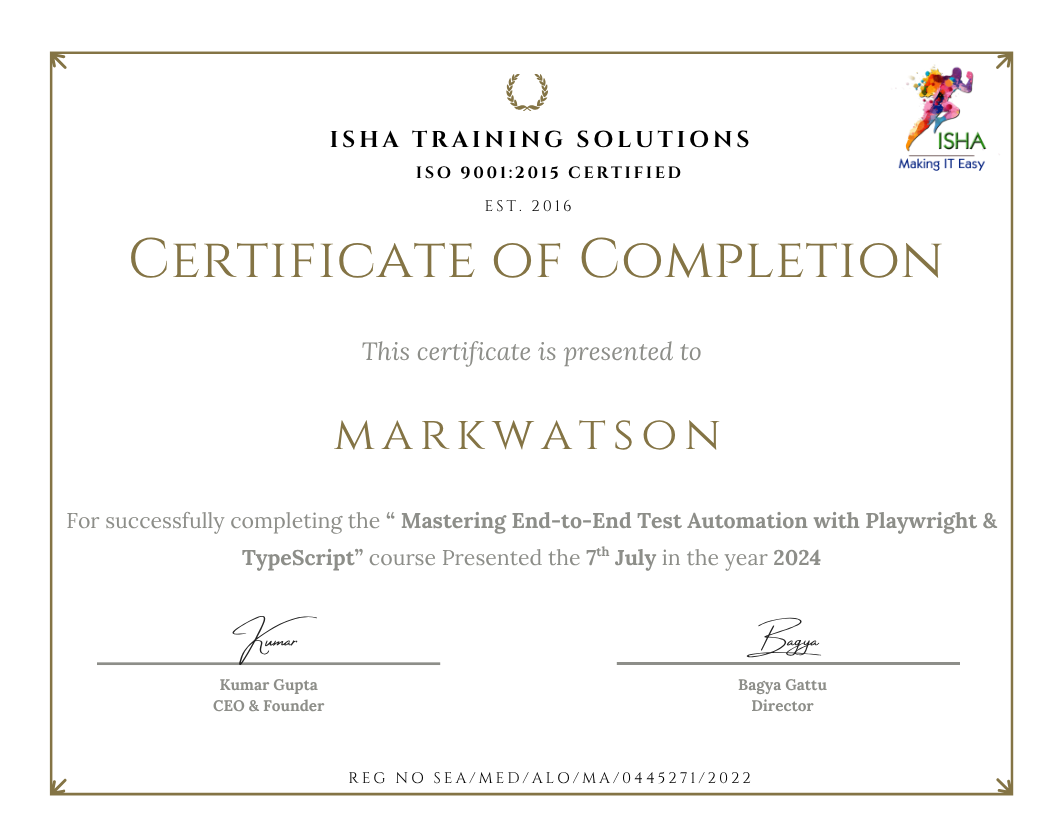
- Course Completion Certificate
- Once payment is made, no refund will be provided.
- If you do not attend the course, the payment cannot be transferred to another batch.
- Course repetition is not allowed for missed sessions.
Course Syllabus:
Module 1: — Claude Developer Foundations & Application Lifecycle
- Claude ecosystem overview: claude.ai, Claude Code, API, SDKs and developer workflows
- LLM fundamentals for developers: tokens, context windows, inference, temperature and model behavior
- Claude API mental model: request, response, messages and content blocks
- REST, JSON, authentication and environment configuration
- SDK installation, project structure and first API integration
- Application lifecycle: prototype → test → evaluate → secure → deploy → monitor
- Developer decision-making: when Claude should solve a task and when conventional code should solve it
- Hands-on: build a simple Claude-powered application and document its architecture
Module 2: Applications & Integration: Production Claude API
- Messages API request/response mechanics
- System instructions, user messages and assistant turns
- Content blocks and multimodal inputs
- Streaming responses and incremental UI/application handling
- Files and document/image inputs
- Batch processing and asynchronous workloads
- Timeouts, retries, rate limits and error classification
- SDK patterns, exception handling and configuration management
- Idempotency and safe retry thinking
- Session lifecycle and application state
- Third-party/cloud deployment considerations
- Hands-on: build a production-style Claude service with streaming, error handling and logging
Module 3:Model Selection, Cost, Latency & Optimization
- How to think about model capability versus workload requirements
- Claude model families and practical selection criteria
- Quality, latency and cost trade-offs
- Token accounting and context budgeting
- Prompt caching concepts and when caching helps
- Batch versus real-time processing decisions
- Controlling unnecessary context and output
- Model pinning, version awareness and change management
- Optimization patterns for high-volume applications
- Hands-on: benchmark the same task with different model/configuration strategies
Module 4: Agents & Workflows
- Workflow vs agent: deterministic execution versus autonomous decision-making
- Agent loops and tool-use loops
- Planning, execution, observation and recovery
- Stop conditions and preventing runaway agents
- Subagents and task delegation
- Supervisor/manager patterns and return contracts
- State, memory and context-window management
- Human-in-the-loop and escalation patterns
- Hosted versus self-managed agent execution concepts
- Claude Agent SDK concepts and implementation patterns
- Hands-on: build a research or support agent with controlled tool use and escalation
Module 5: Prompt & Context Engineering
- Prompt engineering as software engineering
- Instruction hierarchy and clear task framing
- Zero-shot and few-shot prompting
- Examples, delimiters and structured context
- Prompt templates and reusable prompt components
- Context selection, compression and prioritization
- Managing long conversations and tool-result growth
- Structured output and schema-driven responses
- Reducing ambiguity and improving reliability
- Prompt versioning and regression awareness
- Hands-on: convert an unreliable prompt into a production-ready prompt with structured output
Module 6: Tools, Function Calling & MCP
- Why tools are needed in Claude applications
- Tool definitions, descriptions and input schemas
- Tool selection and tool-result handling
- Validation, permissions and safe tool execution
- Designing narrow, predictable tools
- Model Context Protocol: purpose, architecture and terminology
- MCP clients, servers, tools, resources and prompts
- Connecting Claude to external systems through MCP
- Authentication and trust boundaries
- Built-in tools vs custom tools vs MCP vs Skills
- Hands-on: create a small MCP server and connect it to a Claude workflow
Module 7: Security, Safety & Responsible Production
- Threat model for Claude-powered applications
- Prompt injection and indirect prompt injection
- Untrusted user input and untrusted retrieved/tool data
- Secret and API-key management
- Least privilege for tools and external systems
- Tool abuse and permission boundaries
- Data leakage and sensitive-context handling
- Input/output validation and guardrails
- Human approval for high-impact actions
- Secure logging without exposing sensitive data
- Hands-on: attack and harden the capstone application against common AI security failures
Module 8: Claude Code + Evaluation, Testing & Debugging
- Claude Code role in the developer lifecycle
- CLAUDE.md and project context
- Rules, Skills, Commands and subagent concepts
- Session management and controlled automation
- Using Claude Code for coding, refactoring, testing and documentation
- Headless/automated workflows and permission awareness
- Evaluation fundamentals: what should be measured?
- Deterministic tests vs model-based evaluations
- Regression testing for prompts and model changes
- Debugging: API failure vs tool failure vs prompt failure vs model-output failure
- Failure reproduction and observability
- Hands-on: use Claude Code to modify the capstone, then run a small evaluation/regression suite
Module 9: CCDV-F Certification Preparation + Capstone
- Full review of all eight CCDV-F domains
- Domain-weighted revision strategy
- Scenario-based decision questions
- Multiple-choice versus multiple-response strategy
- Distractor analysis and requirement extraction
- API/integration troubleshooting scenarios
- Model-selection and optimization scenarios
- Agent/tool/MCP/security scenarios
- Timed domain quizzes
- Full mock examination
- Capstone presentation and engineering review
- Personal weak-area remediation plan and final exam readiness checklist
Practical Labs & Capstone :
Recommended capstone: Enterprise Support Intelligence Agent
Learners progressively build one realistic application rather than completing unrelated toy demos. The application receives a user request, uses Claude for reasoning and structured output, calls controlled tools, optionally connects through MCP, maintains relevant context, handles errors, records evaluation data and enforces security boundaries.
• Basic Claude API integration
• Streaming and structured responses
• Model selection and cost optimization
• Tool use and external data
• Agent workflow and escalation
• MCP integration
• Security hardening
• Evaluation, regression tests and debugging
• Claude Code-assisted development and final deployment design
Additional Mini-Labs
• Learners progressively build one realistic application rather than completing unrelated toy demos
• Document summarization with controlled context
• Structured invoice/ticket extraction
• Tool-using API assistant
• Multi-step research workflow
• Prompt-injection attack and defense exercise
• Model/cost comparison exercise
• MCP server for a simple internal knowledge or utility service
• LLM regression test suite
Suggested Course Promise
• Certification preparation for professionals targeting CCDV-F.
• Practical Claude development for learners who do not intend to take the exam.
• Hands-on implementation rather than prompt-only training.
• Designed for experienced IT professionals, with fundamentals included where required.
• One evolving enterprise capstone connecting the major concepts.
Recommended Duration Options
Format |
Hours |
Positioning |
| Standard live program | 45h | Best fit for Isha’s current 5-hour/module architecture |
| Fast-track | 30 h | Experienced developers; compress labs and fundamentals |
| Weekend/part-time | 45 h | 2–3 sessions/week with assignments |
| Certification revision | 12-15 h | Separate exam-focused revision/mock package after the full course |
How can I enroll for this course?
Enroll For Free Demo
Course Features
- Lectures 98
- Quiz 0
- Duration 30 hours
- Skill level All levels
- Language English
- Students 0
- Assessments Yes
- 10 Sections
- 98 Lessons
- 30 Hours
- Course Syllabus:0 Items
- Module 1: Module 1 — Claude Developer Foundations & Application Lifecycle8 Items
- 2.1Claude ecosystem overview: claude.ai, Claude Code, API, SDKs and developer workflows
- 2.2LLM fundamentals for developers: tokens, context windows, inference, temperature and model behavior
- 2.3Claude API mental model: request, response, messages and content blocks
- 2.4REST, JSON, authentication and environment configuration
- 2.5SDK installation, project structure and first API integration
- 2.6Application lifecycle: prototype → test → evaluate → secure → deploy → monitor
- 2.7Developer decision-making: when Claude should solve a task and when conventional code should solve it
- 2.8Hands-on: build a simple Claude-powered application and document its architecture
- Module 2: Applications & Integration: Production Claude API12 Items
- 3.1Messages API request/response mechanics
- 3.2System instructions, user messages and assistant turns
- 3.3Content blocks and multimodal inputs
- 3.4Streaming responses and incremental UI/application handling
- 3.5Files and document/image inputs
- 3.6Batch processing and asynchronous workloads
- 3.7Timeouts, retries, rate limits and error classification
- 3.8SDK patterns, exception handling and configuration management
- 3.9Idempotency and safe retry thinking
- 3.10Session lifecycle and application state
- 3.11Third-party/cloud deployment considerations
- 3.12Hands-on: build a production-style Claude service with streaming, error handling and logging
- Module 3:Model Selection, Cost, Latency & Optimization10 Items
- 4.1Controlling unnecessary context and output
- 4.2How to think about model capability versus workload requirements
- 4.3Model pinning, version awareness and change management
- 4.4Quality, latency and cost trade-offs
- 4.5Prompt caching concepts and when caching helps
- 4.6Claude model families and practical selection criteria
- 4.7Batch versus real-time processing decisions
- 4.8Hands-on: benchmark the same task with different model/configuration strategies
- 4.9Token accounting and context budgeting
- 4.10Optimization patterns for high-volume applications
- Module 4: Agents & Workflows11 Items
- 5.1Workflow vs agent: deterministic execution versus autonomous decision-making
- 5.2Agent loops and tool-use loops
- 5.3Planning, execution, observation and recovery
- 5.4Stop conditions and preventing runaway agents
- 5.5Subagents and task delegation
- 5.6Supervisor/manager patterns and return contracts
- 5.7State, memory and context-window management
- 5.8Human-in-the-loop and escalation patterns
- 5.9Hosted versus self-managed agent execution concepts
- 5.10Claude Agent SDK concepts and implementation patterns
- 5.11Hands-on: build a research or support agent with controlled tool use and escalation
- Module 5: Prompt & Context Engineering11 Items
- 6.1Hands-on: convert an unreliable prompt into a production-ready prompt with structured output
- 6.2Prompt versioning and regression awareness
- 6.3Reducing ambiguity and improving reliability
- 6.4Prompt engineering as software engineering
- 6.5Instruction hierarchy and clear task framing
- 6.6Zero-shot and few-shot prompting
- 6.7Examples, delimiters and structured context
- 6.8Prompt templates and reusable prompt components
- 6.9Context selection, compression and prioritization
- 6.10Managing long conversations and tool-result growth
- 6.11Structured output and schema-driven responses
- Module 6: Tools, Function Calling & MCP11 Items
- 7.1Why tools are needed in Claude applications
- 7.2Tool definitions, descriptions and input schemas
- 7.3Tool selection and tool-result handling
- 7.4Validation, permissions and safe tool execution
- 7.5Designing narrow, predictable tools
- 7.6Model Context Protocol: purpose, architecture and terminology
- 7.7MCP clients, servers, tools, resources and prompts
- 7.8Connecting Claude to external systems through MCP
- 7.9Authentication and trust boundaries
- 7.10Built-in tools vs custom tools vs MCP vs Skills
- 7.11Hands-on: create a small MCP server and connect it to a Claude workflow
- Module 7: Security, Safety & Responsible Production11 Items
- 8.1Threat model for Claude-powered applications
- 8.2Prompt injection and indirect prompt injection
- 8.3Untrusted user input and untrusted retrieved/tool data
- 8.4Secret and API-key management
- 8.5Least privilege for tools and external systems
- 8.6Tool abuse and permission boundaries
- 8.7Data leakage and sensitive-context handling
- 8.8Input/output validation and guardrails
- 8.9Human approval for high-impact actions
- 8.10Secure logging without exposing sensitive data
- 8.11Hands-on: attack and harden the capstone application against common AI security failures
- Module 8: Claude Code + Evaluation, Testing & Debugging12 Items
- 9.1Claude Code role in the developer lifecycle
- 9.2CLAUDE.md and project context
- 9.3Rules, Skills, Commands and subagent concepts
- 9.4Session management and controlled automation
- 9.5Using Claude Code for coding, refactoring, testing and documentation
- 9.6Headless/automated workflows and permission awareness
- 9.7Evaluation fundamentals: what should be measured?
- 9.8Deterministic tests vs model-based evaluations
- 9.9Regression testing for prompts and model changes
- 9.10Debugging: API failure vs tool failure vs prompt failure vs model-output failure
- 9.11Failure reproduction and observability
- 9.12Hands-on: use Claude Code to modify the capstone, then run a small evaluation/regression suite
- Module 9: CCDV-F Certification Preparation + Capstone12 Items
- 10.1Full review of all eight CCDV-F domains
- 10.2Domain-weighted revision strategy
- 10.3Scenario-based decision questions
- 10.4Multiple-choice versus multiple-response strategy
- 10.5Distractor analysis and requirement extraction
- 10.6API/integration troubleshooting scenarios
- 10.7Model-selection and optimization scenarios
- 10.8Agent/tool/MCP/security scenarios
- 10.9Timed domain quizzes
- 10.10Full mock examination
- 10.11Capstone presentation and engineering review
- 10.12Personal weak-area remediation plan and final exam readiness checklist