
SAP ABAP Programming (For Beginners – No Prerequisites Required)
(Learn SAP ABAP from scratch with step-by-step practical guidance. Master programming, reports, forms, and data migration without any prior experience.)
This course is designed to teach you ABAP programming from scratch using the latest modern syntax introduced in S/4HANA. No prior experience is required by the end of the course, you’ll be able to build real-time objects using clean, optimized, and future-ready ABAP code, aligned with current industry standards and job requirements
Based on Modern ABAP Syntax Used in S/4HANA High Industry Demand!
About the Instructor:
| With over 7 years of experience in SAP ABAP and ERP solutions, Karthik is a seasoned SAP professional specializing in ABAP programming, RICEF development, CDS Views, and OData services. He has contributed to multiple end-to-end SAP implementation projects across various industries, helping organizations streamline and optimize their business processes through robust and efficient SAP solutions.
As a corporate and online trainer for the past 4+ years, Karthik has successfully guided hundreds of learners in mastering SAP ABAP from scratch covering Reports, Interfaces, Conversions, Enhancements, Forms (RICEF), as well as Core Data Services (CDS) and OData integration techniques. |
Sample Videos:
“ SAP ABAP Programming (For Beginners – No Prerequisites Required) “-Live Training Demo Video
“ SAP ABAP Programming (For Beginners – No Prerequisites Required) “-Live Training Day1 Video
Live Sessions Price:
For LIVE sessions – Offer price after discount is 300 USD 259 99 USD Or USD13000 INR 12900 INR 7900 Rupees
OR
What will I learn by the end of this course?
Free Demo Session:
11th November @ 9:00 PM – 10 PM (IST) (Indian Timings)
11th November @ 10:30 AM – 11:30 AM (EST) (U.S Timings)
11th November @ 3:30 PM – 4:30 PM (BST) (UK Timings)
Class Schedule:
For Participants in India: Monday to Friday @ 9:00 PM – 10:00 PM (IST)
For Participants in the US: Monday to Friday @ 10:30 AM – 11:30 AM (EST)
For Participants in the UK: Monday to Friday @ 3:30 PM – 4:30 PM (BST)
What students have to say about Chandu:
|
👩 Maya Iyer 👨 Arjun Desai 👩 Sanya Nair 👨 Harsh Thakur 👩 Neha Gupta 👨 Ritik Malhotra |
Salient Features:
- 50+ Hours of Live Training along with recorded videos
- Lifetime access to the recorded videos
- Course Completion Certificate
Who can enroll for this course?
- Absolute Beginners: No prior knowledge of SAP or programming is required.
- Aspiring SAP ABAP Developers: Anyone looking to start a career in SAP ABAP.
- IT Professionals: Software developers, testers, or consultants who want to add SAP ABAP to their skill set.
- Students & Graduates: Fresh graduates or students aiming to specialize in SAP technologies.
- ERP & SAP Enthusiasts: Professionals from non-IT backgrounds who want to understand and work with SAP systems.
Course syllabus:
Module 1: Introduction to ERP & SAP
- What is ERP and SAP?
- SAP Introduction
- SAP Architecture
- SAP Logon Introduction
- ABAP Details
- SAP Landscape
Module 2: Prerequisites & System Basics
- Transport Request
- SAP Memory vs ABAP Memory
- Data Types and Operators
- Flow Control Statements
- Package Creation
- Basic SQL Queries
Module 3: Data Dictionary (DDIC)
- Introduction
- Domain
- Data Element
- Database Table
- Types of Table & Differentiation
- Exploring Database Tables
- Table Creation
- Views
- Introduction
- Types of Views
- Creation of Different Types of Views
- Structure
- Introduction
- Difference Between Tables & Structures
- Types of Structures & Differentiation
- Search Help
- Introduction
- Types of Search Help
- Type Group
- Lock Objects
Module 4: Internal Tables
- Introduction
- Difference Between Internal Table & Views
- Types of Internal Tables & Differentiation
- Operations in Internal Table
Module 5: Open SQL
- Introduction
- Types of SQL
- SELECT Statements
- Aggregate Functions & GROUP BY Clause
- INTO Clause
- Joins (Inner & Left Outer)
- FOR ALL ENTRIES
- INSERT, MODIFY, UPDATE, DELETE
Module 6: Modularization Techniques
- Introduction
- Types of Modularization
-
- Includes
- Subroutines (FORM/ENDFORM)
- Function Modules
Module 7: ABAP Debugging & Runtime Analysis
- ABAP Runtime Flow
- Static vs Dynamic Breakpoints
- ABAP Debugger – Features & Usage
- Watchpoints, Field Values, System Variables
- Performance Issues & How to Detect Them
Module 8: Reports
- Introduction
- Events
- Types of Reports
- Classical
- Interactive
- ALV (Grid/List, Interactive)
Module 9: Form Designing
- SMART FORMS
- Introduction
- Components
- Adobe Forms
- Introduction
- Interface
Module 10: Conversions – Data Migration Techniques
- Types of Transfer Techniques
- Types of Data Migration
- BDC (Batch Data Communication)
- Transfer Methods
- BDCDATA Structure
- Recording Procedure
- Call Transaction Program and Session Program
- LSMW (Legacy System Migration Workbench)
- Significance of LSMW
- Principles
- Advantages
- Functions
- Procedure
Module 11: Basics of Module Pool Programming
Module 12: Enhancements
- Introduction
- User Exit
- Customer Exit
- Difference Between User Exit & Customer Exit
Module 13: BADI (Business Add-In)
- Introduction
- Architecture
- Advantages
- Types of BADI
- Difference Between BADI & Customer Exit
Module 14: Object-Oriented ABAP (OO ABAP)
- Introduction to Classes & Objects
- Visibility, Encapsulation, Polymorphism
- Constructors and Destructors
- Events and Event Handling
- Inheritance and Interfaces
- Global vs Local Classes
- Practical Mini-Project (Using OO ABAP)
Module 15: Core Data Services (CDS Views)
- Introduction to CDS in S/4HANA
- CDS Views vs Database Views
- CDS Annotations (UI, Analytical)
- Associations and Joins
- Parameterized CDS Views
- Consumption Views
- Table function
- Practical Examples and Business Use Cases
Module 16: OData Service
- What is OData?
- OData Architecture & REST API Concepts
- Creating OData Services in SEGW
- Exposing CDS Views as OData
Module 17: ABAP Best Practices
- Clean ABAP Coding Guidelines
- Naming Conventions (Tables, Variables, Classes)
- Performance Optimization Techniques
- SQL Optimization Tips (e.g., FOR ALL ENTRIES, buffering, )
- ATC (ABAP Test Cockpit) and Code Inspector Usage
- Error Handling: TRY-CATCH, Message Handling
- Version Control & Transport Management Basics
Module 18: Interview Preparation & Career Guidance
- Top ABAP Interview Questions (Freshers & Experienced)
- Scenario-Based Interview Practice (Reports, BDC, Enhancements)
- Resume Tips for ABAP Developer Roles
- SAP Certification Guidance (If applicable)
- Live Mock Interview (Optional – Bonus Session)
- What to Learn Next (S/4HANA, Fiori or RAP )
Live Sessions Price:
For LIVE sessions – Offer price after discount is 300 USD 259 99 USD Or USD13000 INR 12900 INR 7900 Rupees
OR
For any other details, Call me or Whatsapp me on +91-9133190573
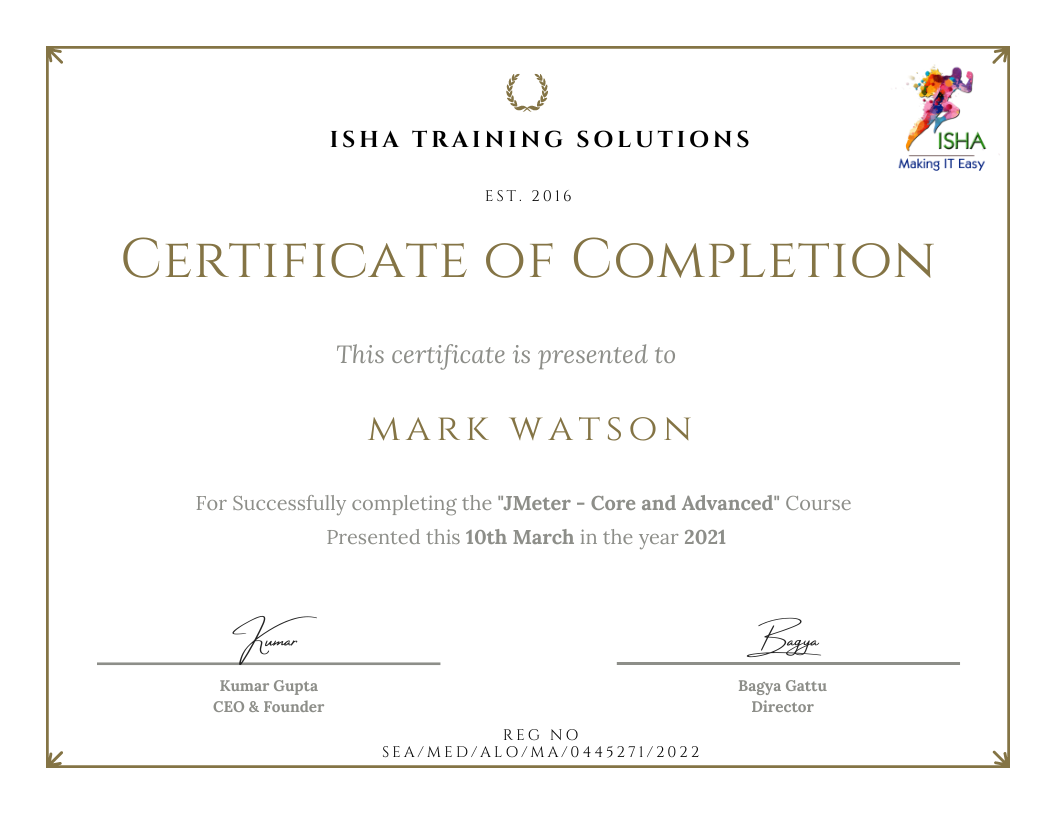
Sample Course Completion Certificate:
Your course completion certificate looks like this….
Important Note:
To maintain the quality of our training and ensure smooth progress for all learners, we do not allow batch repetition or switching between courses. Once you enroll in a batch, please make sure to attend the classes regularly as per the schedule. We kindly request you to plan your learning accordingly. Thank you for your support and understanding.
Course Features
- Lectures 90
- Quiz 0
- Duration 50 hours
- Skill level All levels
- Language English
- Students 0
- Assessments Yes
- 18 Sections
- 90 Lessons
- 50 Hours
- Module 1: Introduction to ERP & SAP6
- Module 2: Prerequisites & System Basics6
- Module 3: Data Dictionary (DDIC)9
- Module 4: Internal Tables4
- Module 5: Open SQL8
- Module 6: Modularization Techniques2
- Module 7: ABAP Debugging & Runtime Analysis5
- Module 8: Reports3
- Module 9: Form Designing2
- Module 10: Conversions - Data Migration Techniques4
- Module 11: Basics of Module Pool Programming0
- Module 12: Enhancements4
- Module 13: BADI (Business Add-In)5
- Module 14: Object-Oriented ABAP (OO ABAP)7
- Module 15: Core Data Services (CDS Views)8
- Module 16: OData Service4
- Module 17: ABAP Best Practices7
- 17.1Clean ABAP Coding Guidelines
- 17.2Naming Conventions (Tables, Variables, Classes)
- 17.3Performance Optimization Techniques
- 17.4SQL Optimization Tips (e.g., FOR ALL ENTRIES, buffering, etc.)
- 17.5ATC (ABAP Test Cockpit) and Code Inspector Usage
- 17.6Error Handling: TRY-CATCH, Message Handling
- 17.7Version Control & Transport Management Basics
- Module 18: Interview Preparation & Career Guidance6
- 18.1Top ABAP Interview Questions (Freshers & Experienced)
- 18.2Scenario-Based Interview Practice (Reports, BDC, Enhancements)
- 18.3Resume Tips for ABAP Developer Roles
- 18.4SAP Certification Guidance (If applicable)
- 18.5Live Mock Interview (Optional – Bonus Session)
- 18.6What to Learn Next (S/4HANA, Fiori or RAP )