
Salesforce FDE, Agentforce & Data 360 Training | 30-Day Course – Live Training
(Master Salesforce FDE, Agentforce, Data 360, AI, Apex, Flow, APIs, integrations, security, automation, solution architecture, prompt engineering, testing, DevOps, and hands-on capstone projects.)
Learn Salesforce FDE, Agentforce & Data 360 from an industry expert with 15+ years of experience through 30 hours of live, beginner-friendly training, with 1-year access to recorded videos. Master Salesforce from basics to advanced, including AI, Agentforce, Data 360, Flow, Apex, APIs, integrations, automation, security, prompt engineering, testing, DevOps, and solution architecture through practical, hands-on learning.
Designed for beginners and professionals, this course combines live instructor-led sessions, real-world use cases, practical exercises, and an end-to-end capstone project to help you build job-relevant Salesforce FDE and AI solution skills. The 1-year recorded video access allows you to revisit the training anytime and strengthen your understanding at your own pace.
Pay via Google Pay or Phonepe using : +91 9133190573 (For Indian accounts only)
Pay via Razorpay (For Indian accounts only)
|
The trainer explains every concept in a very simple and clear way. Even complex topics were easy to understand – Harry I really enjoyed the training sessions. The trainer explained each topic clearly and patiently. The practical examples helped me understand how things work in real projects. Overall, it was a great learning experience. – Swati The training was very informative and practical. The trainer explained both basic and advanced concepts clearly. Real-time examples made the sessions more interesting. All our questions were answered patiently. The hands-on practice helped me understand the concepts better. I would definitely recommend this training to other professionals. – Vijay The trainer has excellent practical knowledge. Every concept was explained in a simple and structured way. I especially liked the real-time project examples. The trainer was always available to clarify our doubts. This training significantly improved my technical confidence. – Sara The training was very practical and easy to follow. The trainer explained complex topics step by step with real-time examples. I gained a lot of confidence from the sessions. – Matthew |
Who can enroll for this course:
- Beginners who want to start a career in Salesforce and AI technologies
- Salesforce Professionals looking to upgrade their skills in FDE, Agentforce, and Data 360
- Salesforce Developers who want to learn AI, Agentforce, Apex, Flow, and solution architecture
- Salesforce Administrators interested in automation, Data 360, Agentforce, and AI capabilities
- Software Testers & QA Professionals looking to expand into Salesforce and AI-based solutions
- Consultants who want to strengthen their Salesforce solution design and FDE skills
- Solution Architects & Technical Architects interested in Agentforce, Data 360, and Salesforce AI architecture
- AI & Technology Professionals looking to build expertise in Salesforce AI and Agentforce
- IT Professionals planning to transition into Salesforce FDE and AI solution roles
- Working Professionals seeking practical, industry-relevant Salesforce skills from basics to advanced concepts
Salient Features:
- 30+ Hours of Live Training along with recorded videos
- 1 Year Access to Session Recordings
- Course Completion Certificate
What will I learn by the end of this course?
- Understand the fundamentals of Salesforce Forward-Deployed Engineering (FDE) and customer-centric solution development.
- Design Salesforce platform and enterprise architectures based on business requirements.
- Build and manage Salesforce data models, objects, relationships, formulas, and data quality.
- Configure Salesforce security, permissions, sharing, and access controls.
- Develop business automation using Salesforce Flow and understand when to use Apex.
- Gain practical knowledge of Apex, SOQL, DML, APIs, authentication, and Salesforce integrations.
- Understand event-driven architecture, Platform Events, and Change Data Capture (CDC).
- Learn Data 360 architecture, data ingestion, data streams, mapping, transformations, and unified data.
- Understand Identity Resolution and unified customer profiles in Data 360.
- Work with Calculated Insights, segmentation, activation, and business use cases.
- Understand AI, Generative AI, LLMs, grounding, RAG, hallucinations, and AI evaluation.
- Develop effective prompt engineering techniques for Salesforce AI use cases.
- Learn Agentforce fundamentals, agentic architecture, topics, instructions, context, actions, and guardrails.
- Build Agentforce solutions using Flow, Apex, Data 360, and Salesforce Knowledge.
- Learn AI guardrails, responsible AI, agent testing, evaluation, failure handling, and escalation.
- Understand single-agent, specialized-agent, and multi-agent architectures.
- Gain knowledge of Salesforce deployment, DevOps, monitoring, observability, and production readiness.
- Learn to convert a business problem into a complete Salesforce FDE solution architecture.
- Apply your knowledge through hands-on exercises and an end-to-end Salesforce FDE capstone project.
- Develop the ability to present, explain, and defend Salesforce architecture and engineering decisions.
Course Syllabus:
Module 1 — FDE & SALESFORCE FOUNDATION
Day 1: FDE Role & Forward-Deployed Engineering Approach
- FDE responsibilities and engagement model
- Customer-focused engineering
- Working through ambiguity
- End-to-end problem ownership
- FDE compared with developer, consultant and architect roles
- Salesforce-focused delivery scope
Practical Exercise: Conduct a paired discovery exercise and prepare 5–7 questions before proposing a Salesforce capability.
Learning Outcome: Describe the FDE approach and separate business discovery from solution selection.
Day 2: FDE Engagement Lifecycle — Discover to Measure
- Business discovery and requirement analysis
- Defining acceptance criteria
- Solution architecture
- Proof-of-concept planning
- Implementation and validation
- Release and deployment
- Observability, measurement and continuous improvement
Practical Exercise: Prepare a one-page solution brief covering the problem, users, current situation, desired outcome and measurable KPIs.
Learning Outcome: Convert an unclear customer request into a structured FDE engagement.
Day 3: Salesforce Platform Architecture & Enterprise Landscape
- Salesforce org fundamentals
- Metadata-driven architecture
- Lightning platform
- App Builder
- CRM capabilities
- Automation services
- Data architecture
- AI and digital experience layers
Practical Exercise: Navigate a Salesforce org and sketch a high-level platform architecture.
Learning Outcome: Identify how the principal Salesforce platform capabilities work together.
Day 4: Salesforce Data Architecture & Object Relationships
- Objects and fields
- Records and data structures
- Lookup relationships
- Master-detail relationships
- Junction objects
- Record types
- Formula fields
- Roll-up summaries
- External identifiers and data quality
Practical Exercise: Review or construct a Salesforce data model and configure the necessary relationships.
Learning Outcome: Translate business requirements into an effective Salesforce data model.
Day 5: Salesforce Security, Permissions & Record Access
- Organization-wide defaults
- Role hierarchy
- Sharing mechanisms
- Profiles
- Permission sets
- Permission set groups
- Object-level permissions
- Field-level security and record visibility
Practical Exercise: Configure a basic access model and validate permissions using different user scenarios.
Learning Outcome: Account for security and access requirements during solution design.
Module 2 — SALESFORCE ENGINEERING FOUNDATION
Day 6: Designing Business Automation with Salesforce Flow
- Record-triggered automation
- Screen-based workflows
- Scheduled and background flows
- Decision logic
- Record operations
- Reusable subflows
- Exception and fault handling
Practical Exercise: Develop a record-triggered Flow and validate both successful and error paths.
Learning Outcome: Choose and implement the appropriate Flow pattern for a business process.
Day 7: Apex Development & Customization Decisions
- Apex classes and methods
- Triggers and execution context
- SOQL querying
- DML operations
- Governor limits
- Invocable Apex
- Using Apex together with Flow
Practical Exercise: Review or develop a small invocable Apex component and call it from Flow.
Learning Outcome: Recognize situations where custom Apex development adds value.
Day 8: Salesforce APIs, Authentication & Platform Integration
- REST API fundamentals
- Salesforce API options
- Authentication principles
- Named Credentials
- Apex-based integrations
- Callouts and native platform capabilities
Practical Exercise: Use a Salesforce API or Workbench-based scenario to retrieve and update records.
Learning Outcome: Explain the fundamentals of Salesforce API-based integration.
Day 9: Event-Driven Salesforce Architecture
- Event-driven design principles
- Platform Events
- Change Data Capture
- Publish/subscribe patterns
- Asynchronous processing
Practical Exercise: Configure or examine a Platform Event scenario and demonstrate an event-driven process.
Learning Outcome: Apply event-based thinking to Salesforce solution architecture.
Day 10: Salesforce Solution Architecture & Engineering Choices
- Scalable solution design
- Maintainability
- Modular architecture
- Performance considerations
- Security considerations
- Platform limits
- Selecting between Flow, Apex, data and AI capabilities
Practical Exercise: Create a high-level architecture and explain the rationale behind each major component.
Learning Outcome: Justify technical design decisions using business and platform considerations.
Module 3 — DATA 360
Day 11: Data 360 Overview & Unified Data Architecture
- Purpose and capabilities of Data 360
- Unified data foundation
- Data ingestion
- Data harmonization
- Identity management
- Insights
- Segmentation and activation
Practical Exercise: Explore Data 360 and determine which business scenarios benefit from a unified data layer.
Learning Outcome: Explain where Data 360 fits into a Salesforce architecture and when to use it.
Day 12: Data 360 Sources, Data Streams & Ingestion
- Source systems
- Data streams
- Ingestion mechanisms
- Source-to-target mapping
- Refresh considerations
- Data quality
Practical Exercise: Configure or inspect a supported Data 360 data stream/source scenario.
Learning Outcome: Describe how source information is brought into Data 360.
Day 13: Data Model Objects, Mapping & Data Transformation
- Data Model Objects
- Source mapping
- Data transformations
- Relationships
- Semantic consistency
- Data preparation
Practical Exercise: Map sample source information to a target Data 360 model and perform a basic transformation.
Learning Outcome: Prepare source data for a unified and usable Data 360 model.
Day 14: Identity Resolution & Unified Customer Profiles
- Matching strategies
- Reconciliation approaches
- Identity resolution
- Unified individual records
- Customer profile construction
Practical Exercise: Configure or simulate identity resolution and review the resulting unified profile.
Learning Outcome: Explain how multiple source identities can be consolidated into a trusted customer view.
Day 15: Insights, Segmentation & Data 360 Activation
- Calculated Insights
- Business metrics
- Audience segmentation
- Activation concepts
- Using unified data for business outcomes
Practical Exercise: Create or examine a calculated insight/segment and demonstrate a downstream activation scenario where supported.
Learning Outcome: Translate unified data into actionable business intelligence and activation.
Module 4 — AI & AGENTFORCE
Day 16: AI Concepts for Salesforce FDE Practitioners
- Traditional AI and generative AI
- Large language models
- Context management
- Hallucinations
- Grounding
- Retrieval-augmented generation (RAG)
- Evaluation and human oversight
Practical Exercise: Compare deterministic Flow behavior with an AI-generated response and identify potential risks.
Learning Outcome: Differentiate AI-generated behavior from deterministic Salesforce automation.
Day 17: Generative AI, LLM Prompting & Grounded Responses
- Prompt design
- Instruction hierarchy
- Context provision
- Grounding techniques
- Output controls
- Examples and few-shot guidance
- Reducing hallucinations
Practical Exercise: Develop and refine prompts using straightforward, ambiguous and unsupported user questions.
Learning Outcome: Create effective AI instructions and explain the purpose of grounding.
Day 18: Agentforce Fundamentals & Agentic Solution Architecture
- Agent concepts
- Agentforce platform
- Agents vs. chatbots vs. automation
- Topics
- Instructions
- Reasoning and decision-making
- Actions
- Context and guardrails
Practical Exercise: Configure a basic Agentforce agent, define a topic and test sample conversations.
Learning Outcome: Explain the main building blocks of an Agentforce solution.
Day 19: Agentforce Topics, Instructions & Behavior Configuration
- Topic definition
- Scope and boundaries
- Instruction design
- Variables and context
- Behavior configuration
- Escalation handling
Practical Exercise: Create and refine Agentforce topics and instructions using both in-scope and out-of-scope scenarios.
Learning Outcome: Control agent behavior through effective configuration and boundaries.
Day 20: Agentforce Actions with Flow, Apex & Salesforce Services
- Agent actions
- Flow-based actions
- Apex-backed actions
- Inputs and outputs
- Permissions
- Action design considerations
Practical Exercise: Build or configure an Agentforce action using Flow or Apex and invoke it through a conversation.
Learning Outcome: Connect an agent’s intent to an executable Salesforce business operation.
Module 5 — ADVANCED AGENTFORCE & FDE ENGINEERING
Day 21: Agentforce with Data 360 — Context-Aware AI
- Unified customer context
- Data 360 as a grounding source
- Customer profiles
- Insights
- Context patterns
Practical Exercise: Connect suitable Data 360 information to an agent use case and evaluate customer-specific responses.
Learning Outcome: Explain how unified data can improve agent context and relevance.
Day 22: Salesforce Knowledge, Grounding & Context Management
- Knowledge articles
- Data categorization
- Search and retrieval
- Trusted content
- Knowledge grounding
- Customer-specific context vs. general knowledge
Practical Exercise: Review Knowledge content and test an agent with policy-based and customer-specific questions.
Learning Outcome: Distinguish knowledge-based grounding from record-based customer context.
Day 23: Prompt Optimization, Guardrails & Responsible AI
- Prompt refinement
- Behavior boundaries
- Safe response patterns
- Sensitive information considerations
- Refusal handling
- Escalation strategies
- Agent guardrails
Practical Exercise: Use adversarial and negative scenarios to strengthen prompts, instructions and guardrails.
Learning Outcome: Design agent behavior that is safer, controlled and more reliable.
Day 24: Agent Testing, Evaluation & Exception Management
- Test planning
- Functional and AI evaluation
- Positive and negative testing
- Permission validation
- Action failures
- Fallback mechanisms
- Escalation paths
Practical Exercise: Build a test matrix, execute positive/negative scenarios and document observed failures with corrective actions.
Learning Outcome: Assess whether an agent is sufficiently reliable for production use.
Day 25: Agentic Architecture — Single, Specialized & Multi-Agent Models
- Single-agent patterns
- Specialized agents
- Agent orchestration
- Delegation
- Responsibility boundaries
- Modularity
- Maintainability
Practical Exercise: Prepare an architecture decision record and prototype the selected agent approach.
Learning Outcome: Select and justify an appropriate agent decomposition strategy.
Module 6 — FDE SOLUTION DELIVERY & CAPSTONE
Day 26: Salesforce Integration & Event-Based Solution Patterns
- Salesforce-native APIs
- Event-driven integration
- Flow and Apex integration
- Synchronous vs. asynchronous execution
- Transaction boundaries
Practical Exercise: Develop or inspect a Salesforce-native API/event pattern and document its execution flow.
Learning Outcome: Select an appropriate Salesforce-native integration approach.
Day 27: Deployment, DevOps, Observability & Production Readiness
- Sandbox strategy
- Metadata management
- Deployment principles
- Salesforce CLI awareness
- Version control
- Monitoring
- Logs
- Operational KPIs
- Production readiness
Practical Exercise: Prepare a deployment and production-readiness checklist and review available monitoring information.
Learning Outcome: Understand the responsibilities involved before and after a Salesforce solution reaches production.
Day 28: FDE Solution Design Workshop — Business Need to Salesforce Architecture
- Discovery and requirements
- Architecture design
- Component selection
- Security
- Data architecture
- AI capabilities
- Automation
- Testing strategy
- Success metrics and KPIs
Practical Exercise: Complete a solution-design workshop and present the proposed architecture in 5–7 minutes.
Learning Outcome: Demonstrate independent FDE-style solution decision-making.
Day 29: FDE Capstone — Build an End-to-End Salesforce PoC
- Capstone planning
- Implementation execution
- Data configuration
- Flow and Agentforce components
- Data 360 where appropriate
- Testing
- Documentation
Practical Exercise: Build a functional proof of concept in a Salesforce environment and prepare an architecture/demo presentation.
Learning Outcome: Demonstrate an end-to-end Salesforce FDE proof of concept.
Day 30: Capstone Demo, Architecture Review & Final Assessment
- Solution demonstration
- Architecture walkthrough and defense
- Technical questioning
- Failure and edge-case scenarios
- KPI review
- Final assessment and reflection
Practical Exercise: Present the live solution, participate in architecture review and technical Q&A, and complete an individual assessment.
Learning Outcome: Clearly explain and defend the engineering decisions made throughout the capstone.
FAQ’s for Forward Deployed Engineer (FDE) Salesforce Course:
1. What is a Forward Deployed Engineer (FDE) in Salesforce?
A Forward Deployed Engineer (FDE) works closely with customers to understand business problems, design Salesforce-based solutions, build prototypes, and help deliver solutions from discovery through deployment.
2. Who is this Salesforce FDE course suitable for?
This course is suitable for beginners, Salesforce professionals, developers, administrators, testers, consultants, architects, and IT professionals who want to build skills in Salesforce FDE, Agentforce, Data 360, and AI.
3. Is this course suitable for beginners?
Yes. The course is beginner-friendly and follows a structured basics-to-advanced approach, allowing learners to gradually build their Salesforce FDE and AI skills.
4. What topics are covered in this Salesforce FDE course?
The course covers Salesforce FDE, Salesforce architecture, Flow, Apex, APIs, security, Data 360, Generative AI, Agentforce, prompt engineering, grounding, integrations, testing, DevOps, solution design, and capstone projects.
5. Will I get live training?
Yes. The program includes 30 hours of live instructor-led training with practical exercises, demonstrations, discussions, and hands-on activities.
6. Who will deliver the training?
The training is delivered by an industry expert with 9+ years of professional experience, providing practical and industry-oriented guidance.
7. Will there be hands-on practice?
Yes. The course includes hands-on exercises, practical Salesforce scenarios, solution-design activities, Agentforce exercises, and an end-to-end capstone project.
8. Will I get access to recorded training videos?
Yes. Participants receive 1-year access to recorded training videos, allowing them to revisit the sessions and practice at their own pace.
9. Will I learn Agentforce in this course?
Yes. You will learn Agentforce fundamentals, agentic architecture, topics, instructions, actions, context, guardrails, testing, evaluation, and integration with Flow, Apex, Data 360, and Salesforce Knowledge.
10. Will I learn Salesforce Data 360?
Yes. The course covers Data 360 architecture, data ingestion, data streams, mapping, transformations, identity resolution, unified customer profiles, calculated insights, segmentation, and activation.
11. Will the course cover Salesforce AI and Generative AI?
Yes. You will learn AI fundamentals, Generative AI, LLMs, prompting, grounding, RAG, hallucinations, AI evaluation, responsible AI, and AI guardrails.
12. Will I learn Salesforce solution architecture?
Yes. The course focuses on designing Salesforce solutions based on business requirements, scalability, security, data, automation, AI, integrations, testing, and performance considerations.
13. Will there be a real-world project?
Yes. The program includes an end-to-end Salesforce FDE capstone project, where you will design and build a solution and present the architecture and implementation.
14. Do I need prior Salesforce experience to join?
No. The course is designed to accommodate beginners and progressively introduces advanced Salesforce FDE, Agentforce, Data 360, and AI concepts.
15. What skills will I have after completing the course?
You will be able to analyze business requirements, perform FDE discovery, design Salesforce architectures, work with Flow and Apex, build Agentforce solutions, use Data 360 concepts, integrate Salesforce capabilities, test solutions, and present end-to-end solution designs.
16. Is this course focused only on theory?
No. The course combines conceptual learning, live demonstrations, hands-on exercises, real-world scenarios, solution-design activities, and a capstone project.
How can I enroll for this course?
OR
For any other details, Call me or Whatsapp me on +91-9133190573
Live Sessions Price:
For LIVE sessions – Offer price after discount is 200 USD 159 119 USD Or USD15000 INR 13000 INR 9900 Rupees.
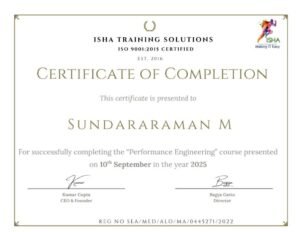
Sample Course Completion Certificate:
Your course completion certificate looks like this……
Note:
To maintain the quality of our training and ensure a smooth learning experience for all participants, we do not allow batch repetition or switching between courses.
To reiterate, moving from one course to another or shifting from one trainer to another (even if it is the same course) is not possible. Changing batches or trainers in any form is strictly not permitted.
We request all learners to attend the scheduled sessions regularly and make the most of their learning journey. Thank you for your understanding and continued support.
Course Features
- Lectures 30
- Quiz 0
- Duration 30 hours
- Skill level All levels
- Language English
- Students 389
- Assessments Yes
- 7 Sections
- 30 Lessons
- 30 Hours
- FDE & SALESFORCE FOUNDATION5
- SALESFORCE ENGINEERING FOUNDATION5
- DATA 3605
- AI & AGENTFORCE5
- ADVANCED AGENTFORCE & FDE ENGINEERING5
- FDE SOLUTION DELIVERY & CAPSTONE5
- Day 1: FDE Role & Forward-Deployed Engineering Approach0


