
AI Security & LLM Red Teaming for QA and Test Engineers – Complete Course
(Learn AI Security and LLM Red Teaming for QA and Test Engineers. Master LLM vulnerability testing, prompt injection, jailbreak testing, AI security validation, and hands-on security testing techniques.)
Artificial Intelligence is transforming software development, but it is also introducing a new generation of security vulnerabilities. Large Language Models (LLMs), AI-powered applications, and autonomous AI agents can be exposed to threats such as prompt injection, data leakage, jailbreak attacks, insecure output handling, model manipulation, and unauthorized access.
Traditional software testing approaches are no longer sufficient to validate the security and reliability of AI-powered applications.
AI Security & LLM Red Teaming for QA and Test Engineers is a practical, hands-on course designed to help QA engineers, software testers, automation engineers, and security professionals understand how to identify, test, and mitigate security vulnerabilities in LLM-based applications.
You will learn how to approach AI systems from an attacker’s perspective, design adversarial test scenarios, execute LLM security tests, and evaluate the robustness of AI-powered applications.
The course bridges the gap between traditional software quality assurance and emerging AI security testing practices, equipping you with skills that are increasingly important as organizations integrate generative AI into their products and enterprise workflows.
Why Choose This Course?
- Learn the fundamentals of AI Security and LLM Red Teaming.
- Develop skills to identify vulnerabilities in AI-powered applications.
- Master Prompt Injection and Jailbreak Testing techniques.
- Understand OWASP Top 10 for LLM Applications.
- Gain practical knowledge of RAG and AI Agent Security Testing.
- Learn to identify sensitive information disclosure and data leakage.
- Get hands-on exposure to tools like PyRIT, Garak, and Promptfoo.
- Explore AI security testing automation using Python.
- Understand real-world AI security threats and attack scenarios.
- Learn industry-relevant AI Red Teaming methodologies.
- Build practical skills through hands-on exercises and projects.
- Learn from Amir, an experienced technical trainer with 8+ years of experience.
- Ideal for Manual QA, Automation, API, and Security Test Engineers.
- Expand your career opportunities in the emerging AI Security domain.
- Prepare yourself to test and secure the next generation of AI-powered applications.
About The Instructor:
|
Amir is an experienced software testing professional and technical trainer with over 8 years of experience in Software Quality Assurance, Test Automation, and emerging AI Security technologies. He specializes in helping software testing professionals strengthen their technical skills through practical, industry-oriented training. His expertise includes automation testing, API testing, AI-powered application testing, and modern software quality engineering practices. With a strong focus on hands-on learning, Amir simplifies complex technical concepts through real-world examples, practical demonstrations, and project-based exercises. In this course, Amir guides learners through the fundamentals of AI Security, LLM vulnerabilities, Prompt Injection, Jailbreak Testing, RAG Security, AI Agent Security, and LLM Red Teaming methodologies. |
Live Sessions Price:
For LIVE sessions – Offer price after discount is 300 USD 259 119 USD Or USD25000 INR 19900 INR 9900 Rupees
OR
Free Demo On:
Indian Timings: 30th November @ 9 PM – 10 PM (IST)/
U.S Timings: 30th November@ 10:30 AM – 11:30 AM (EST)/
U.K Timings: 30th November@ 3:30 PM – 4:30 PM (BST)
Class Schedule:
For Participants in India: Monday to Friday @ 9 PM – 10 PM (IST)
For Participants in the US: Monday to Friday @ 10:30 AM – 11:30 AM (EST)
For Participants in the UK: Monday to Friday @ 3:30 PM – 4:30 PM (BST)
What students have to say about the Trainer :
|
Understanding AI security concepts was made much easier through practical examples. The explanations of prompt injection, jailbreak attacks, and LLM vulnerabilities are particularly useful. – [Rahul Sharma] Great course! Every topic is relevant to the current AI industry. I gained a much better understanding of LLM Security Testing and how to identify vulnerabilities in AI applications. – [Mohammed Arif] Excellent training! The trainer explains complex AI security concepts in a simple and understandable way. The practical examples make learning interesting. – [Varun Yadav] The course provides excellent insights into AI Security and LLM Red Teaming. I particularly liked the sessions on OWASP Top 10 for LLM Applications and prompt injection testing. – [Samuel Joseph] Very practical and informative course. Learning about RAG security, AI agent vulnerabilities, and data leakage helped me understand the security challenges associated with modern AI applications. – [Ananya Rao] I was looking for a course that would help me move beyond traditional automation testing. This training gave me a good understanding of how QA skills can be applied to AI Security Testing. Highly recommended! – [kiran] Excellent coverage of tools like PyRIT, Garak, and Promptfoo. The demonstrations and practical exercises provide a good foundation for exploring LLM security testing. – [stella] The AI Agent Security module was particularly interesting. Understanding how AI agents interact with external tools and how these interactions can introduce security risks was a great learning experience. – [Manohar reddy] A well-structured course covering everything from LLM fundamentals to advanced security testing concepts. The real-world scenarios and hands-on exercises make the training valuable for experienced QA professionals. – [Ahmed Khan] Brilliant training! The concepts are explained clearly, and the course provides a structured learning path into the emerging field of AI Security and LLM Red Teaming. – [satya] |
What You Will Learn
-
- Understand the fundamentals of LLM security and the AI threat landscape.
- Identify common vulnerabilities in LLM-powered applications.
- Perform LLM Red Teaming and adversarial security testing.
- Identify and exploit prompt injection and jailbreak vulnerabilities in controlled environments.
- Test for sensitive information disclosure and data leakage.
- Evaluate insecure output handling and improper input validation.
- Understand RAG (Retrieval-Augmented Generation) security vulnerabilities.
- Test AI agents, tool calling, and unauthorized tool execution.
- Perform security testing of AI application workflows.
- Use AI security testing tools and frameworks.
- Design AI security test cases and adversarial testing scenarios.
- Understand OWASP Top 10 for LLM Applications and AI security best practices.
- Document vulnerabilities, assess risks, and recommend mitigation strategies.
Salient Features:
- 30+ Hours of Live Training along with recorded videos
- 1Year access to the recorded videos
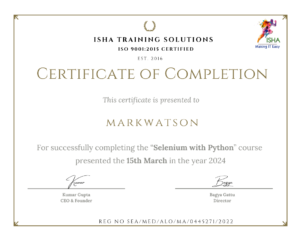
- Course Completion Certificate
Who can enroll in this course?
- Manual QA Engineers and Software Testers.
- Automation Test Engineers.
- API and Performance Test Engineers.
- Software Quality Assurance Professionals.
- Security Test Engineers and Ethical Hackers.
- AI/ML Engineers interested in application security.
- Developers building LLM-powered applications.
- Professionals looking to transition into AI Security Testing and LLM Red Teaming.
Course syllabus:
Module 1: Introduction to AI Security and LLM Fundamentals
- Introduction to Generative AI and Large Language Models.
- Understanding LLM architecture and how LLMs process prompts.
- Tokens, context windows, embeddings and inference.
- How ChatGPT, Claude and Gemini work at a high level.
- LLM-powered applications and enterprise AI architectures.
- Security challenges in traditional applications vs AI applications.
- Introduction to AI Security Testing and LLM Red Teaming.
- Hands-on: Explore LLM applications and identify potential security risks.
Module 2: OWASP Top 10 for LLM Applications
- Introduction to OWASP Top 10 for LLM Applications.
- Understanding LLM application threat models.
- Prompt injection.
- Sensitive information disclosure.
- Supply chain vulnerabilities.
- Data and model poisoning.
- Improper output handling.
- Excessive agency.
- System prompt leakage.
- Vector and embedding weaknesses.
- Unbounded consumption.
- Hands-on: Map common LLM vulnerabilities to QA test scenarios.
Module 3:Prompt Injection and Jailbreak Testing
- Understanding direct and indirect prompt injection.
- System prompt manipulation.
- User input manipulation.
- Context injection attacks.
- Jailbreak techniques and their security implications.
- Role-based instruction manipulation.
- Multi-turn prompt attacks.
- Testing model resistance to malicious instructions.
- Designing adversarial test cases.
- Hands-on: Execute controlled prompt injection and jailbreak tests against test applications.
Module 4: LLM Data Leakage and Privacy Testing
- Understanding sensitive information disclosure.
- Testing for PII leakage.
- Confidential data exposure.
- System prompt and internal instruction leakage.
- Cross-user data leakage.
- Session isolation and conversation history testing.
- Data retention and privacy considerations.
- Testing access control in AI applications.
- Hands-on: Design and execute data leakage test scenarios.
Module 5: LLM Application Security Testing
- Security testing of LLM-powered web applications.
- Input validation and output validation.
- Insecure output handling.
- API security testing for LLM applications.
- Authentication and authorization testing.
- Rate limiting and resource consumption.
- Error handling and information disclosure.
- Testing AI application boundaries.
- Hands-on: Perform security testing against a sample LLM application and its APIs.
Module 6: RAG (Retrieval-Augmented Generation) Security Testing
- Understanding RAG architecture.
- Vector databases and embedding models.
- Document ingestion and retrieval workflows.
- RAG security threat landscape.
- Unauthorized document retrieval.
- Cross-tenant data leakage.
- Document poisoning and malicious content injection.
- Access control and permission validation.
- Testing retrieval accuracy and data isolation.
- RAG hallucination and grounding evaluation.
- Hands-on: Security testing of a sample document-based RAG chatbot.
Module 7: AI Agent Security Testing
- Introduction to autonomous AI agents.
- AI agent architecture and workflows.
- Tool calling and function execution.
- Agent permissions and access control.
- Excessive agency vulnerabilities.
- Unauthorized tool execution.
- Indirect prompt injection through external content.
- Agent memory and context security.
- Multi-agent security considerations.
- Testing human approval and authorization controls.
- Hands-on: Test an AI agent with controlled tool access and malicious instructions.
Module 8: LLM Security Testing Tools and Frameworks
- Introduction to industry-relevant tools and frameworks:
- PyRIT: Microsoft’s Python Risk Identification Toolkit for generative AI.
- Garak: LLM vulnerability scanning and probing.
- Promptfoo: LLM evaluation and red teaming.
- Giskard: AI model and application testing.
- DeepEval: LLM evaluation and testing.
- OWASP LLM resources: Security guidance and testing methodologies.
- Hands-on: Run security probes, analyse findings and generate vulnerability reports.
Module 9: AI Security Test Automation
- Introduction to automated LLM security testing.
- Building reusable LLM security test cases.
- Python fundamentals for AI security testing.
- Automating prompt injection test scenarios.
- Testing multiple prompts and adversarial inputs.
- Regression testing for LLM applications.
- Model response validation and security assertions.
- Integrating security tests into CI/CD pipelines.
- Generating automated test execution reports.
- Hands-on: Build a Python-based automated LLM security testing framework.
Module 10: AI Red Teaming Methodologies
- Understanding the AI Red Teaming lifecycle.
- Threat modelling for LLM applications.
- Identifying attack surfaces.
- Designing adversarial test strategies.
- Black-box vs white-box testing.
- Manual vs automated red teaming.
- Testing model robustness and safety guardrails.
- Risk classification and vulnerability prioritization.
- Reporting security findings and remediation recommendations.
- Hands-on: Conduct a structured red team assessment of a sample AI application.
Module 11: AI Security Standards and Best Practices
- OWASP Top 10 for LLM Applications.
- OWASP guidance for agentic applications.
- NIST AI Risk Management Framework.
- MITRE ATLAS introduction.
- Responsible AI and AI governance.
- Security guardrails and defensive controls.
- Secure prompt engineering.
- Model access control and monitoring.
- Security testing strategies for production AI systems.
- Hands-on: Prepare an AI security assessment checklist aligned with relevant industry frameworks.
Module 12: Real-World Project and Capstone
- A complete practical project covering the security assessment of an AI-powered application.
- Project activities:
- Understand the architecture of an AI-powered application.
- Identify potential security vulnerabilities.
- Prepare an AI security test strategy.
- Execute prompt injection and jailbreak tests.
- Test sensitive information disclosure.
- Perform RAG security testing.
- Evaluate AI agent tool-calling permissions.
- Automate selected security test cases.
- Document vulnerabilities and assess severity.
- Prepare a professional AI security assessment report.
Frequently Asked Questions (FAQs):
1. Who should take this AI Security & LLM Red Teaming course?
This course is designed for Manual QA Engineers, Automation Test Engineers, API Testers, Performance Engineers, Developers, Security Test Engineers, and AI/ML professionals who want to build skills in AI Security Testing and LLM Red Teaming.
2. Do I need prior cybersecurity or ethical hacking experience?
No. Prior cybersecurity or ethical hacking experience is not mandatory. The course starts with AI security fundamentals and gradually introduces LLM vulnerabilities, adversarial testing techniques, and practical security assessment methodologies.
3. Is this course suitable for Manual QA and Automation Test Engineers?
Absolutely! The course is specifically designed to help traditional QA professionals expand beyond functional and automation testing into AI Security Testing, vulnerability assessment, and LLM Red Teaming.
4. What topics will I learn in this course?
You will learn AI Security Fundamentals, OWASP Top 10 for LLM Applications, Prompt Injection, Jailbreak Testing, Data Leakage Testing, RAG Security, AI Agent Security, LLM Security Testing Tools, AI Security Test Automation, and Red Teaming methodologies.
5. What tools and technologies will be covered?
You will get practical exposure to industry-relevant AI security tools and frameworks, including Microsoft PyRIT, Garak, Promptfoo, Giskard, and DeepEval, along with OWASP LLM security resources.
6. Will I learn how to test AI agents and RAG applications?
Yes. You will learn to identify security vulnerabilities in RAG-based applications and AI agents, including unauthorized document retrieval, data leakage, prompt injection, excessive permissions, and insecure tool execution.
7. Do I need Python programming knowledge to attend this course?
Basic Python knowledge is recommended, especially for automated LLM security testing exercises. However, advanced programming skills are not required to understand the core AI security concepts.
8. Is this course practical or theory-based?
The course emphasizes hands-on learning through practical exercises, security testing tools, adversarial test scenarios, LLM application assessments, and a final capstone project.
9. What career opportunities can I explore after completing this course?
You can explore opportunities such as AI Security Tester, LLM Security Testing Engineer, AI Red Teaming Engineer, Generative AI Quality Engineer, AI Application Security Analyst, and AI Agent Security Tester. Actual opportunities depend on your existing experience and additional technical skills.
10. Will I receive a certificate after completing the course?
Yes. Participants who successfully complete the applicable course requirements will receive a course completion certificate from Isha Training Solutions.
How can I enroll for this course?
For LIVE sessions – Offer price after discount is 300 USD 259 119 USD Or USD25000 INR 19900 INR 9900 Rupees
OR
For any other details, Call me or Whatsapp me on +91-9133190573
Sample Course Completion Certificate:
Your course completion certificate looks like this……
Course Policy :
- Once payment is made, no refund will be provided.
- If you do not attend the course, the payment cannot be transferred to another batch.
- Course repetition is not allowed for missed sessions
- We request all learners to attend the scheduled sessions regularly and make the most of their learning journey. Thank you for your understanding and continued support.
Course Features
- Lecture 0
- Quiz 0
- Duration 30 hours
- Skill level All levels
- Language English
- Students 0
- Assessments Yes


