
MLOps & AI Platform Engineering Course – Live Training
(From ML Lifecycle & MLflow to ML Pipelines, CI/CD/CT, Kubernetes, LLMOps, RAG, AI Observability, Cloud AI, Security, and Production Capstone Projects)
This MLOps & AI Platform Engineering Course is designed to help you build, deploy, manage, and monitor production-ready Machine Learning systems from ML lifecycle fundamentals to advanced production implementation. You will learn ML lifecycle management, reproducibility, Git and DVC, MLflow, experiment tracking, model registry, ML pipelines, Airflow, Kubeflow, CI/CD/CT, automated testing, quality gates, model deployment, FastAPI, Docker, and Kubernetes.
The course also covers modern LLMOps and AI/LLM production infrastructure, including LLM serving, vLLM, Ollama, RAG, vector databases, AI observability, OpenTelemetry, Prometheus, Grafana, model and data drift, cost monitoring, cloud AI platforms, GPU infrastructure, security, PII protection, governance, and Agentic AI infrastructure and reliability. Through hands-on labs and a real-world production capstone project, you will design, deploy, monitor, secure, troubleshoot, and production-harden complete MLOps systems while developing practical skills for MLOps, LLMOps, ML Engineering, and AI Infrastructure roles.
About The Instructor:
|
Vishnu Priya is an experienced MLOps, Machine Learning Engineering, and AI Infrastructure professional and trainer with 10+ years of industry experience in Machine Learning, MLOps, Python, ML pipelines, model deployment, cloud infrastructure, and production AI systems. She brings practical industry expertise in building, deploying, monitoring, scaling, and managing production-ready ML and AI workloads. She has hands-on expertise across MLflow, Git, DVC, Airflow, CI/CD/CT, FastAPI, Docker, Kubernetes, model serving, LLMOps, RAG, vector databases, AI observability, Prometheus, Grafana, cloud AI platforms, GPU infrastructure, security, and AI governance. Her training approach focuses on connecting ML development with production engineering, covering key areas such as reproducibility, automation, scalability, reliability, monitoring, security, cost optimization, and troubleshooting. With 10+ years of professional experience and training experience with 200+ students, Vishnu Priya delivers practical, hands-on sessions using real-world projects, production scenarios, and industry practices. Her learner-focused approach helps professionals develop industry-ready skills for careers in MLOps, LLMOps, ML Engineering, AI Infrastructure, and Production AI Engineering. |
Live Sessions Price:
For LIVE sessions – Offer price after discount is 200 USD 159 119 USD Or USD15000 INR 13000 INR 9900 Rupees.
OR
Free Demo Session:
31st August @ 9:00 PM – 10:00 PM (IST) (Indian Timings)
31st August @ 11:30 AM – 12:30 PM (EST) (U.S Timings)
31st August @ 4:30 PM – 5:30 PM (BST) (UK Timings)
Class Schedule:
For Participants in India: Monday to Friday @ 9:00 PM – 10:00 PM (IST)
For Participants in the US: Monday to Friday @ 11:30 AM – 12:30 PM (EST)
For Participants in the UK: Monday to Friday @ 4:30 PM – 5:30 PM (BST)
What student’s have to say about Trainer :
|
⭐ The course provides a very structured approach to MLOps and AI Platform Engineering. I especially liked the hands-on work with MLflow, CI/CD, Kubernetes, and production AI systems. – Rahul Sharma ⭐ Excellent training! The modules on AI architecture, model serving, observability, and Kubernetes were explained clearly with practical examples.– Priya ⭐ I joined this program to strengthen my AI Platform Engineering skills. The LLM serving, RAG, GPU infrastructure, and AI gateway modules were extremely useful and practical.– Michael Anderson ⭐ One of the most comprehensive AI Platform Engineering programs I have taken. It covers MLOps, LLMOps, Kubernetes, RAG, observability, security, agentic AI, and production architecture. The capstone project made the learning experience especially valuable.– Sneha ⭐ Very practical and well-organized training. The instructor connects AI concepts with real production challenges. The hands-on capstone, troubleshooting, cost optimization, and system-design sessions were especially helpful. – Ayaan Khan |
What will I Learn by end of this course?
- Build, deploy, and manage production-ready ML and AI systems using MLOps and AI Platform Engineering practices.
- Develop ML/AI inference APIs and services using Python, FastAPI, testing, logging, and automation.
- Manage ML pipelines, experiments, models, versioning, and reproducibility using MLflow, Git, DVC, Airflow, and CI/CD/CT.
- Deploy and scale ML and AI workloads on Kubernetes, including autoscaling, GPU infrastructure, model serving, and inference optimization.
- Build LLM and RAG solutions using LLM serving, embeddings, vector databases, retrieval pipelines, and inference optimization.
- Implement AI observability, security, governance, quality, reliability, and cost monitoring for production AI systems.
- Design and implement AI platforms and Agentic AI systems while gaining hands-on experience through capstone projects, system design, production troubleshooting, and failure testing.
Salient Features:
- 45 Hours of Live Training with real-time project demonstrations
- 1 Year Access to All Recorded Sessions for continuous learning and revision
- Industry-Recognized Course Completion Certificate upon successful completion
Who can enroll in this course?
- MLOps Engineers looking to strengthen their production ML and LLMOps skills.
- ML Engineers & Data Scientists who want to deploy, scale, monitor, and manage production ML systems.
- DevOps, SRE & Cloud Engineers interested in MLOps, Kubernetes, AI infrastructure, and cloud AI.
- Software Engineers & Backend Developers transitioning into MLOps, ML Engineering, or AI infrastructure roles.
- AI/LLM Engineers working with LLM serving, RAG, observability, and Agentic AI systems.
- Platform Engineers & Cloud Architects interested in designing and operating enterprise AI platforms.
- IT Professionals & Experienced Developers preparing for careers in MLOps, LLMOps, ML Engineering, and AI Infrastructure.
Course syllabus:
Module 1: AI/ML Systems + Production Architecture
- AI vs ML vs Deep Learning vs Generative AI
- Traditional software vs ML systems
- Training vs inference
- Batch vs real-time inference
- ML lifecycle
- MLOps vs DevOps vs ML Engineering vs Data Science
- LLMOps and AI Platform Engineering
- Production failure scenarios
Hands-on
- Kick off the enterprise case study; map DevOps to ML lifecycle; create an end-to-end AI architecture.
Interview & Discussion Checks
- Why does ML need lifecycle controls?
- Where does the AI Platform Engineer add value?
Module 2: Python for MLOps + Testing
- Production Python structure
- Virtual environments and dependencies
- Configuration
- APIs/JSON/YAML
- Logging
- Type hints
- pytest
- Fixtures and mocking
- Unit vs integration tests
- API contract testing
- Linting/formatting
Hands-on
- Build a small FastAPI inference service; write pytest tests; mock an external provider; add structured logging.
Interview & Discussion Checks
- How do you test an inference API?
- What should be mocked?
Module 3: Versioning + Reproducibility + MLflow
- Git vs DVC/Git LFS
- Dataset/model/configuration versioning
- Lineage
- Reproducibility
- MLflow Tracking
- Experiments/runs/metrics/artifacts
- Model Registry
- Promotion and rollback
Hands-on
- Track three experiments; register a model; promote and roll back a version; document lineage.
Interview & Discussion Checks
- How would you reproduce a production model six months later?
Module 4: ML Pipelines + Orchestration
- Pipeline components
- DAGs
- Artifacts and metadata
- Airflow
- Kubeflow Pipelines overview
- Scheduling
- Retries
- Data validation
- Model validation
- Feature-store concepts
Hands-on
- Build ingestion → validation → training → evaluation; add failure paths and validation gates.
Interview & Discussion Checks
- Airflow vs Kubeflow?
- Where should validation happen?
Module 5: CI/CD/CT + Quality Gates
- CI/CD for ML
- Continuous Training
- GitHub Actions/Jenkins
- Automated tests
- Data/model/security gates
- Artifact promotion
- Approval workflows
- Rollback
- Deployment strategies
Hands-on
- Create CI workflow; block promotion on failed metrics; create release-candidate and production workflows.
Interview & Discussion Checks
- How is continuous training different from CD?
Module 6: Model Serving + API Engineering
- Inference API design
- REST vs gRPC
- FastAPI
- Batch vs online inference
- Model servers
- KServe/Triton positioning
- Health checks
- Readiness/liveness
- Timeouts
- Error handling
Hands-on
- Containerize a model API; implement /health and /predict; add validation, logging and tests.
Interview & Discussion Checks
- What makes an inference API production-ready?
Module 7: Kubernetes for AI Workloads
- Pods/Deployments/Services
- ConfigMaps/Secrets
- Ingress
- Resource requests/limits
- Probes
- HPA
- Rolling deployment
- CPU vs GPU
- Troubleshooting
Hands-on
- Deploy inference to Kubernetes; configure autoscaling; load-test and observe scaling.
Interview & Discussion Checks
- How do you troubleshoot CrashLoopBackOff?
Module 8: LLM Serving + Inference Optimization
- LLM inference fundamentals
- Tokens/context windows
- Hosted vs self-hosted
- Ollama
- vLLM
- TGI
- Quantization
- Batching
- KV cache
- Caching
- Throughput/latency/cost
Hands-on
- Run an open model; expose it through an inference server; benchmark before/after optimization
Interview & Discussion Checks
- When would you choose vLLM over Ollama?
Module 9: RAG + Vector Infrastructure
- RAG architecture
- Document ingestion
- Chunking
- Embeddings
- Similarity search
- Retrieval
- Vector DBs
- Pinecone/Weaviate/pgvector/Milvus
- RAG failure modes
Hands-on
- Build ingestion → embeddings → vector DB → retrieval → generation; measure retrieval latency
Interview & Discussion Checks
- Where can RAG fail?
Module 10: AI Observability
- Metrics/logs/traces
- OpenTelemetry
- Prometheus
- Grafana
- Data quality
- Data drift
- Model drift
- Prediction monitoring
- Inference latency/errors
Hands-on
- Instrument inference; build dashboards; create a basic drift/quality alert
Interview & Discussion Checks
- Why aren’t CPU/memory dashboards enough?
Module 11: LLM Quality + Cost Observability
- Token usage
- TTFT
- Throughput
- Cost/request
- Provider/model comparison
- Hallucination signals
- Response quality
- Prompt tracing
- AI cost governance
Hands-on
- Track tokens and estimated cost; compare models; build quality/cost dashboard.
Interview & Discussion Checks
- How would you investigate an AI cost spike?
Module 12: AI Platform Architecture
- Internal AI platform
- Self-service APIs
- Shared infrastructure
- Developer experience
- Multi-team design
- Model registry
- Inference platform
- RAG platform
- Observability
- Governance
Hands-on
- Extend the case-study platform; define platform APIs and self-service vs governed capabilities.
Interview & Discussion Checks
- AI platform vs MLOps pipeline?
Module 13: LLM Gateway + Multi-Tenancy
- Provider abstraction
- Routing
- Fallback
- Rate limiting
- Authentication
- Quotas
- Model selection
- Multi-tenancy
- Team cost allocation
Hands-on
- Build gateway across two providers; add fallback, rate limiting and usage logging
Interview & Discussion Checks
- Why abstract model providers?
Module 14: GPU Infrastructure + Cost Engineering
- CPU vs GPU
- VRAM
- Kubernetes GPU scheduling
- Device plugins
- GPU node pools
- Autoscaling
- Spot/preemptible GPUs
- Right-sizing
- Capacity planning
- Cost allocation
Hands-on
- Design GPU deployment; estimate three traffic scenarios; compare fixed vs autoscaled capacity
Interview & Discussion Checks
- How do you prevent GPU wastage?
Module 15: Cloud AI Platform
- Cloud AI architecture
- SageMaker workflow
- Vertex AI overview
- Managed vs self-managed
- Object storage
- Identity/access
- Networking
- Secrets
- Cloud cost controls
Hands-on
- Deploy one inference workload on a cloud AI platform; map it to Kubernetes; compare operational responsibilities
Interview & Discussion Checks
- When is managed AI infrastructure preferable?
Module 16: Security + PII + Governance
- Endpoint security
- Authentication/authorization
- RBAC
- Secrets
- Encryption
- PII in prompts/logs
- Redaction
- Audit logging
- Prompt injection awareness
- Responsible AI
- Approval workflows
Hands-on
- Implement PII redaction; add production approval gate; create audit trail
Interview & Discussion Checks
- What should never be logged?
Module 17: Agentic System Infrastructure
- Agent vs chatbot
- Tools/function calling
- State
- Memory
- Planning
- Orchestration
- Multi-agent architecture
- Tool permissions
Hands-on
- Build a simple multi-agent workflow and map components to the platform
Interview & Discussion Checks
- What infrastructure does an agent need beyond an API?
Module 18: Agent Reliability + Async Workflows
- Retries
- Exponential backoff
- Timeouts
- Circuit breakers
- Concurrency
- Async execution
- Idempotency
- Cancellation
- Failure recovery
- Agent observability
Hands-on
- Add retry/backoff and timeout; implement bounded concurrency; test graceful shutdown and failure recovery.
Interview & Discussion Checks
- How do you avoid retry storms?
Module 19: Capstone Architecture Workshop
- Requirements
- Architecture trade-offs
- API boundaries
- Data flow
- Deployment topology
- Security
- Observability
- Cost model
- Failure scenarios
Hands-on
- Choose capstone; create architecture; define functional/non-functional requirements; instructor review.
Interview & Discussion Checks
- What are the top risks in your architecture?
Module 20: Capstone Build Lab I
- Repository structure
- Docker
- CI/CD
- MLflow/model registry
- Inference
- Kubernetes
- RAG/gateway integration
Hands-on
- Implement core platform and first production path; document setup/deployment
Interview & Discussion Checks
- Instructor code review clinic
Module 21: Capstone Build Lab II
- Observability
- Cost tracking
- Security
- Quality signals
- Load testing
- Failure testing
- Runbook
Hands-on
- Complete dashboards; add security; load-test; inject failure and demonstrate recovery
Interview & Discussion Checks
- Production-readiness review
Module 22: Capstone Production Hardening
- Testing review
- Security review
- Cost review
- Reliability review
- Documentation
- Deployment checklist
- Portfolio cleanup
Hands-on
- Run final readiness checklist; fix highest-risk issue; finalize README and architecture
Interview & Discussion Checks
- What would stop you approving production?
Module 23: Capstone Defense + System Design + Career
- Capstone presentation
- Technical defense
- Architecture trade-offs
- System design
- Troubleshooting
- Resume/LinkedIn positioning
- Job-title mapping
Hands-on
- Present and defend platform; complete production AI system-design mock interview
Interview & Discussion Checks
- Design an AI platform for 100 developers
1. Python Fundamentals (30+ hours Self-paced videos will be provided)
Module 1.1: Introduction to Python
- What is a programming language – categories and difference
- Understanding Python and its Features
- Setting Up the Environment (Installation and IDEs and Jupyter Notebook)
- Writing and Running Your First Python Program
- Python 2 vs 3
- Reason for Python 3
- What is Backward compatibility
- Python Syntax compared to other programming languages
- Interpreted and Compiled Languages
Module 1.2: Basic Python Constructs
- Comments
- Variables
- Naming Conventions and Naming Restriction
- Assigning and Reassignment
- Data Types
- Strings,
- Numbers and Floats
- Booleans and None
- Basic Operators
- Arithmetic, Comparison, Chained Comparison, Logical Operators
- Handling Inputs in python
- Operator Precedence
- String Operations
- String concatenation
- Formatting String and Raw String
- Indexing String and Slicing
- String Escape
Module 1.3: Python Program Flow
- Indentation
- Type conversion
- Conditional Statements
- if, elif, else
- Loops
- for and while
- Break and Continue and Pass
Module 1.4: Data Structures in Python
- Lists
- Accessing, Modifying, and Looping through Lists
- Tuples
- Properties and Use Cases
- Sets
- Unique Elements and Basic Operations
- Dictionaries
- Keys, Values, and Basic Methods
Module 1.5 : Built in functions and methods in python
- Type and Type Conversion functions
- Math functions
- Sequence functions
- String Functions
- List Functions
- Dictionary functions
- Boolean functions
- Input and Output functions
Module 1.6: Functions
- Creating your own Functions
- Functions Parameters and variable Arguments
- Return Statements
- Default Arguments
- Order to maintain in function
Module 1.7: Practical Function Insights
- Help function and Function Documentations
- Pointers
- Scope of Variables (local vs global)
- Lambda Functions (Introduction)
Module 1.8: Errors and Exception Handling
- Error Vs Exception
- Try, Except, Finally Blocks
- Catching any Exception
- Raising Exceptions
- Using else with Try-Except
- Break
Module 1.9: Basic File Handling
- File handling modes
- with statement
- Opening and Reading file
- Creating new csv and pdf file using python
- Writing to csv and PDF
- Overwriting and appending to csv and PDF
- Handling non acsii characters in PDF
Module 1.10: Capstone Project for Basic Python
- Build a Simple Application:
- Examples: A Calculator, Number Guessing Game.
2. Intermediate Python : Code Smarter
Module 2.1: Advanced Data Structures
- Advanced List Methods
- List Comprehensions
- Nested Lists
- Advanced Dictionary Methods
- Dictionary Comprehensions
- Working with Nested Dictionaries
- Sets and their Advanced Operations
Module 2.2: Collections
- namedtuple()
- deque()
- ChainMap()
- Counter()
- defaultdict()
Module 2.3: Iterators and Generators
- Understanding Iterators
- Create Custom iterators
- iter() and next() Functions
- Creating Generators with yield
- Generators as Iterators
- Generators comprehension
- Use Cases of Generators
Module 2.4 : Classes and Objects and Methods
- Introduction to Classes and Objects
- Understanding self
- Constructors (__init__ Method)
- Class and Instance attributes
- var() and dir() functions
- Creating your own class
- Object creation
- Defining and Using Methods
Module 2.5: Packages in python
- Creating Modules and Packages
- Importing Modules and Packages
- Understanding import, from, and as
- Exploring modules
- dir() and help()
Module 2.6: Working with Libraries
- Standard Libraries Overview
- Importing Library and using the methods in library
- (math, random, datetime)
Module 2.7: Object-Oriented Programming (OOP) Basics
- Basic Inheritance and Overriding
- Polymorphism
- Abstraction
- Overloading
- super()
- Encapsulation
Module 2.8: Introduction to Logging , Debugging and Testing
- Writing Unit Tests for your code
- Assertion
- Analysing the code – pylint
- Automating the tests and analysis
- Logging Basics with logging Module
- Basic Debugging with pdb
Module 2.9: Important utilities in Python
- random
- random and seed
- random with sequence
- sample with replacement
- sample without replacement
- shuffle
- sleep
- Date Time
- Timing your code
Module 2.10: Capstone Project for Intermediate Python
-
- Build a Functional Application:
- Examples: Number guessing Game , Cards Game
- Build a Functional Application:
How can I enroll for this course?
OR
For any other details, Call me or Whatsapp me on +91-9133190573
Live Sessions Price:
For LIVE sessions – Offer price after discount is 200 USD 159 119 USD Or USD15000 INR 13000 INR 9900 Rupees.
FAQ –AI & Machine Learning Engineering Master Program:
1️⃣ What is this Advanced MLOps course about?
This course provides end-to-end training in MLOps and production Machine Learning, covering ML lifecycle management, reproducibility, MLflow, ML pipelines, CI/CD/CT, model deployment, Kubernetes, LLMOps, RAG, AI observability, cloud AI, security, cost optimization, and production AI systems.
2️⃣ Do I need prior MLOps experience?
No. The course starts with AI/ML systems, ML lifecycle, MLOps concepts, Python, testing, versioning, and reproducibility, then progressively moves into advanced topics such as Kubernetes, LLMOps, RAG, observability, security, and Agentic AI infrastructure.
3️⃣ What tools and technologies will I learn?
You will work with industry-relevant technologies including Python, FastAPI, pytest, Git, DVC, MLflow, Airflow, Kubeflow, GitHub Actions/Jenkins, Docker, Kubernetes, Ollama, vLLM, OpenTelemetry, Prometheus, Grafana, vector databases, and cloud AI platforms.
4️⃣ Does the course cover ML pipelines and automation?
Yes. You will learn to build end-to-end ML pipelines covering data ingestion, validation, training, evaluation, artifacts, metadata, scheduling, retries, and validation gates using concepts and tools such as Airflow and Kubeflow Pipelines.
5️⃣ Does the course include CI/CD and Continuous Training?
Yes. The course covers CI/CD/CT for ML, automated testing, data and model quality gates, security checks, artifact promotion, approval workflows, deployment strategies, and rollback mechanisms using GitHub Actions and Jenkins.
6️⃣ Will I learn how to deploy ML models to production?
Yes. You will learn inference API design, FastAPI, Docker, model serving, health checks, readiness/liveness probes, Kubernetes deployments, autoscaling, resource management, and production troubleshooting.
7️⃣ Does the course cover LLMOps, RAG, and Agentic AI?
Yes. The advanced modules cover LLM serving, vLLM, Ollama, inference optimization, RAG architecture, embeddings, vector databases, LLM observability, cost monitoring, Agentic AI, tool calling, memory, orchestration, multi-agent systems, retries, timeouts, and failure recovery.
8️⃣ Does the course cover monitoring and observability?
Yes. You will learn AI observability using OpenTelemetry, Prometheus, and Grafana, including inference latency, errors, data quality, data drift, model drift, prediction monitoring, token usage, TTFT, throughput, response quality, and AI cost monitoring.
9️⃣ Does the course cover AI security and governance?
Yes. The course covers authentication, authorization, RBAC, secrets management, encryption, PII protection and redaction, audit logging, prompt injection awareness, responsible AI, approval workflows, and production security practices.
🔟 Is there a real-world capstone project?
Yes. The course includes a comprehensive production AI/MLOps capstone project covering architecture, Docker, CI/CD, MLflow, model deployment, Kubernetes, RAG or gateway integration, observability, cost tracking, security, load testing, failure testing, documentation, production hardening, and final system-design defense
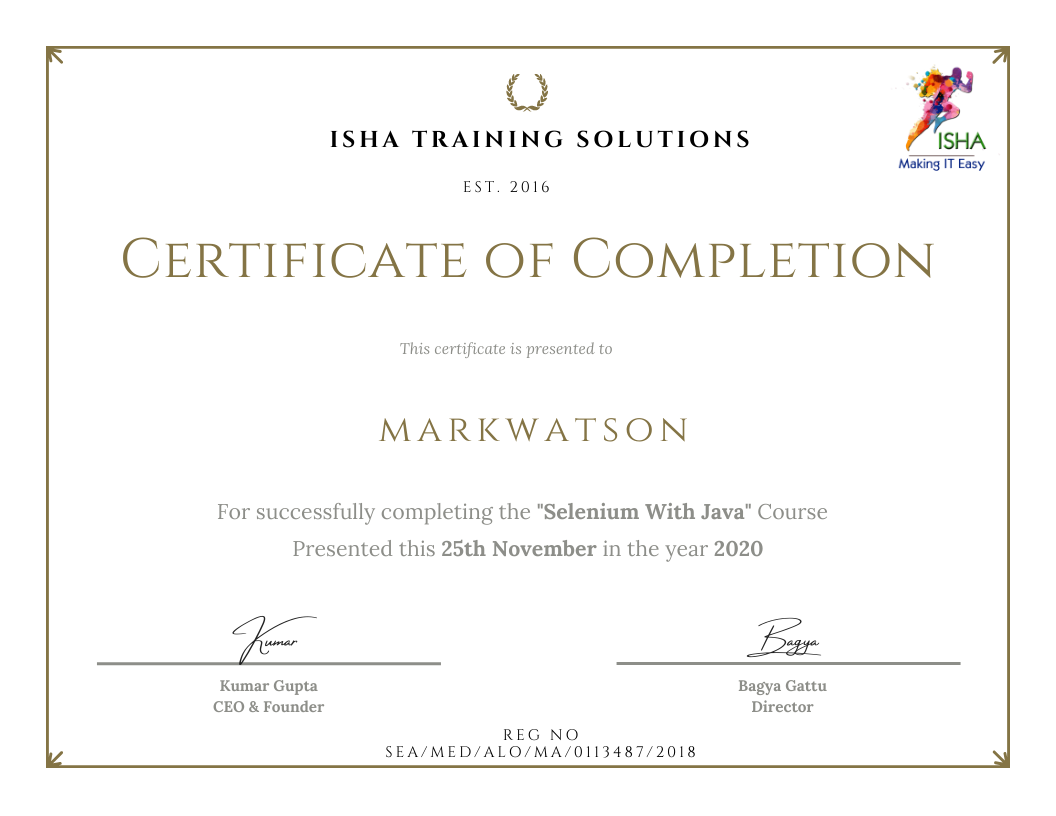
Sample Course Completion Certificate:
Your course completion certificate looks like this……
Note:
To maintain the quality of our training and ensure a smooth learning experience for all participants, we do not allow batch repetition or switching between courses.
To reiterate, moving from one course to another or shifting from one trainer to another (even if it is the same course) is not possible. Changing batches or trainers in any form is strictly not permitted.
We request all learners to attend the scheduled sessions regularly and make the most of their learning journey. Thank you for your understanding and continued support.